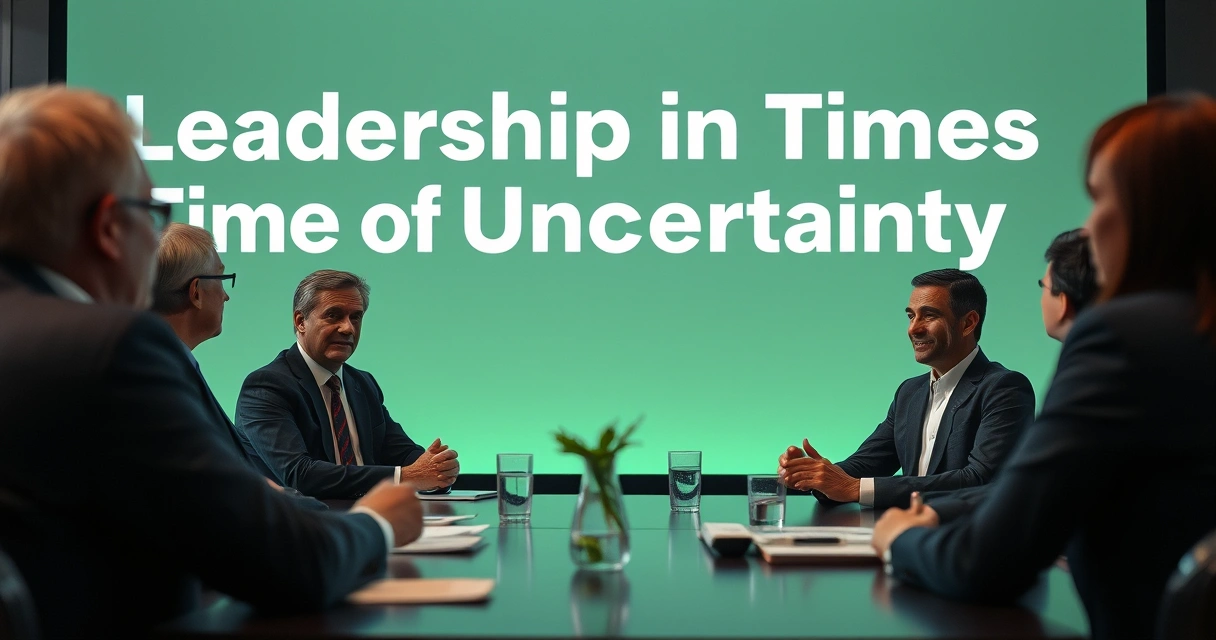
Leadership in Times of Uncertainty: Lessons from Successful U.S. CEOs
Introduction
Uncertainty is the only constant these days — markets wobble, supply chains hiccup, and the next headline can change investor sentiment overnight. I’ve watched leaders on the front lines make decisions that either calmed their teams or sent everyone scrambling; there’s a pattern to who steadies the ship and who doesn’t. This piece pulls together practical lessons from a handful of successful U.S. CEOs, blending observation, a bit of stubborn optimism, and hard-earned ideas you can actually use.

If you’re hunting for a guia leadership times style roadmap or even a step-by-step leadership times tutorial, you’re in the right place. I’ll avoid fluff and focus on behaviors and moves that translate — the kind you can try this week, not next quarter. Expect stories, concrete tactics, and yes, a few candid opinions about what works and what feels like theater.
Desenvolvimento Principal
Look at leaders like Satya Nadella at Microsoft, Tim Cook at Apple, and Mary Barra at General Motors — different industries, similar anchors. They double down on clarity: clear priorities, clear communication, and a ruthless focus on what moves the needle. Nadella’s cultural shift toward empathy and learning; Cook’s insistence on long-term product and environmental bets; Barra’s pivot toward electric vehicles — these are examples of leadership that chooses direction under uncertainty rather than hiding behind indecision.
What I find striking is how they pair strategy with operational rhythm. For instance, many CEOs instituted faster decision loops and smaller experiments instead of large, slow bets. That meant structures like weekly cross-functional reviews, empowered small teams that could act without 10 layers of approval, and scenario playbooks. Those practices are why companies can pivot quickly and keep customers feeling secure even when the world looks shaky.
Sustainability and reputation have become non-negotiable in crisis leadership. Executives who embraced questions like how companies go green early — and made real investments — found themselves with stronger customer loyalty and easier recruiting. It’s not just virtue signaling; it’s strategic resilience. When supply shocks hit or regulatory tides shifted, environmentally forward companies had fewer surprises and more options to adapt.
🎥 Vídeo relacionado ao tópico: Leadership in Times of Uncertainty: Lessons from Successful U.S. CEOs
Analysis and Benefits
Let’s break down the upside in plain terms. Leaders who succeed in uncertainty consistently produce: improved team trust, faster product cycles, and stronger stakeholder confidence. Trust matters because when employees believe leadership will be honest and decisive, they volunteer creative solutions instead of hoarding information. That dynamic alone can change the trajectory of a company facing adversity.
From an investor perspective, boards reward leaders who show repeatable processes for dealing with ambiguity. Those processes — scenario planning, decentralized decision rights, and clear communications — reduce headline risk and create a compounding advantage. There’s also a tangible benefit to customers: predictability. Even in uncertain times, customers want to know where a company stands on quality, delivery, and values.
Finally, the environmental angle returns here. Firms that thought ahead about how companies go green not only avoid certain regulatory and supply chain shocks but often discover cost savings and new revenue streams. That’s why integrating sustainability into core strategy isn’t just feel-good; it’s risk management and growth planning rolled into one. Strong CEOs treat sustainability as an operational lever, not an appendix to marketing.
Implementação Prática
Okay, enough theory — how do you actually use these lessons? If you’re asking como usar leadership times in your day-to-day, start small and pragmatic. Create a one-page playbook for uncertainty: three priorities, two early-warning indicators, and a daily 15-minute cross-team sync. I’ve seen teams transform simply by limiting scope and increasing cadence.
Here’s a compact leadership times tutorial you can try right away:
- Define the non-negotiables: List 2–3 things you won’t compromise in a crisis (customer service, cash runway, safety).
- Set fast feedback loops: Replace monthly reviews with weekly check-ins and quick A/B experiments.
- Empower small teams: Give guardrails and let small groups make decisions; escalate only when necessary.
- Communicate like it matters: Use clear, human updates — no corporate fog; say what you know and what you don’t.
- Measure leading indicators: Track early signals, not just lagging metrics like quarterly revenue.
And if you want a guia leadership times for broader adoption, build a short training module — a 45-minute session with examples, role plays, and a checklist. I’ve run these sessions; people leave with practical commitments, not just inspiration. Regarding sustainability, a pragmatic first move is a two-track plan: quick wins (energy efficiency, supplier assessment) and strategic bets (product redesign, circular models) — that’s how companies go green without breaking the bank.

Perguntas Frequentes
What traits separate great CEOs in uncertainty from average ones?
Most great CEOs combine clear decision-making with humility. They admit what they don’t know, which paradoxically makes their judgments more credible. They also create structures that allow the organization to learn fast and course-correct. In my experience, emotional steadiness and the ability to listen are underrated but essential traits.
How can a small company implement leadership practices used by large U.S. CEOs?
Start with scale-friendly versions: shorter meeting cadences, decision rights for front-line teams, and a short playbook that everyone understands. You don’t need corporate layers; you need clarity and trust. Small firms can outmaneuver big ones by moving faster — use that advantage.
Is sustainability a distraction during crises, or a strategic advantage?
It’s absolutely a strategic advantage if you plan it right. Companies that prepare how companies go green thoughtfully gain resilience and often cost savings over time. Short-term crises don’t erase long-term risks like climate or resource constraints; leaders who integrate sustainability into operations are better positioned for both risk and growth.
Where can I find a practical guia leadership times or leadership times tutorial?
Look for concise, experience-based guides — not academic papers. A useful tutorial will include templates: a one-page uncertainty playbook, a communication cadence, and a set of leading indicators. If you’re in a hurry, adapt the quick checklist above and run a 45-minute workshop with your leadership team to operationalize it.
What are the first three actions I should take this week to lead better in uncertainty?
Number one: host a 30-minute alignment on the organization’s top three priorities. Number two: establish a weekly 15-minute cross-functional check-in focused on early-warning signals. Number three: communicate honestly with your team about what’s changing and what remains fixed. Small moves, repeated, create momentum.
How do I measure whether my leadership approach is working during volatile times?
Use a mix of leading and lagging metrics: employee sentiment, speed of decision-making, number of experiments run, and short-term financial indicators. The soft signals — trust, clarity, fewer escalations — matter as much as revenue trends. Track them consistently and adjust.
Can these lessons be applied to remote or hybrid teams?
Absolutely. In remote setups, clarity and cadence are even more crucial. Use asynchronous updates, keep meetings sharp, and empower local decision-making. Tools help, but culture — trust and transparency — does the real heavy lifting.
Conclusion
Leadership in times of uncertainty isn’t about dramatic pronouncements; it’s about steady habits, honest communication, and practical structures that let teams act. I’ve admired CEOs who do the simple things relentlessly — they win. If you take away one idea, let it be this: design for quick learning and protect the trust of the people who execute the work. Try the short playbook this week, and you’ll see how fast small changes compound.
And if you ever want a personalized guia leadership times or a more hands-on leadership times tutorial, reach out — I’ll happily share templates and war stories. We all need a little help steering through the fog, and good leadership makes the difference between merely surviving and coming out stronger.